Thematic Itineraries
The UPV team, based on the data obtained through the diagnostic work of the Historic Centre, has designed six thematic itineraries that cover the six current neighbourhoods that make up the Ciutat Vella district. The criteria taken into account for their design have been varied. Each route proposes an overview of each urban area including heritage and cultural elements, residential buildings and urban palaces, the state of historical and modern shops, local history with special attention to those historical landmarks that offer their specific character to each of the six neighbourhoods. The aim of the itineraries is to make known the historical and cultural potential of the city centre by walking through its streets and to recognise and identify the main threats to urban life. These routes have been carried out in workshops that are being developed within the neighbourhood association ‘Amics del Carme’ with the residents themselves, local technicians and invited guests. In general, the opinion of the people who have already taken part in the workshops is that the experience has been very positive, as it generates a sense of attachment and commitment to the future of urban life. All the routes have an estimated duration of between 1 and 1.5 hours, are fully accessible and adapted to people with reduced mobility as there are no barriers and they are completely flat.
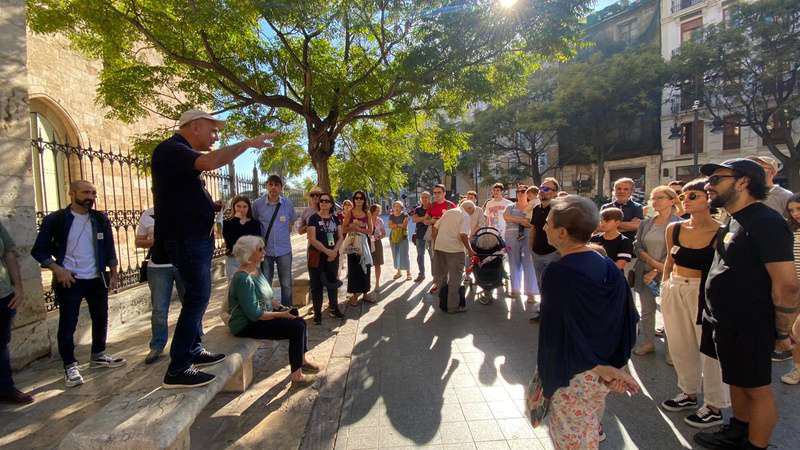
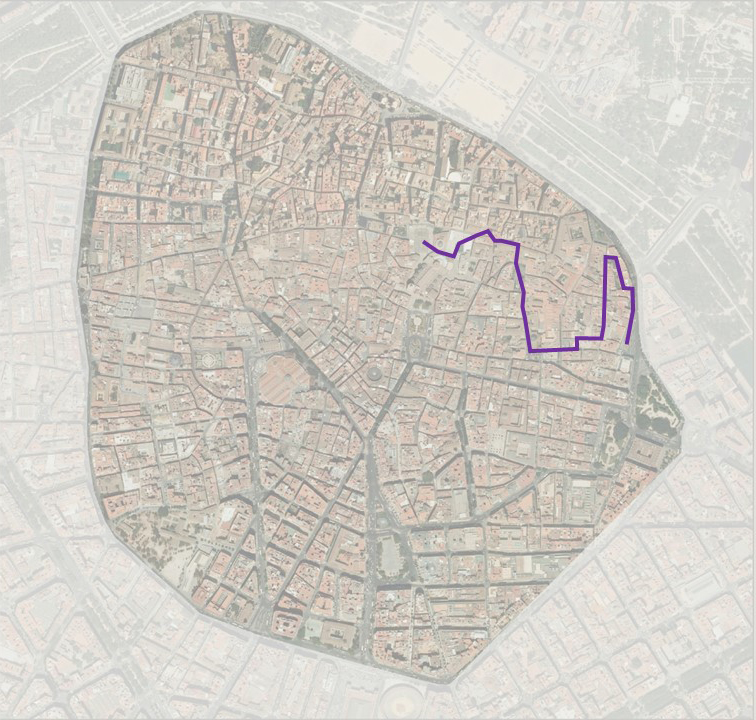
1. El Carmen neighbourhood
The millenary neighbourhood of El Carmen, like Velluters, grew under the protection of two walls, the 11th century Islamic wall that limited it to the east, and the Christian wall that protected it to the west. Throughout the thousand years of its history, the plots of land of El Carmen have always been inhabited and dedicated to very diverse activities, it has been a Muslim market garden and suburb, a refuge for the Moors, a brothel, a settlement for multiple medieval guilds and artisan and palatial residences for the municipal aristocracy. In the mid-19th century, on the site of the old brothel located to the northwest, the city’s first industrial complex was set up, of which some elements still remain. Nowadays, it is a popular neighbourhood with a high density of hotels and restaurants, with many tourist flats, discotheques and pubs. It also has great cultural attractions, such as the Cultural Centre of the Convent of Carmen, theatres, museums, palaces and archaeological remains of great heritage value.
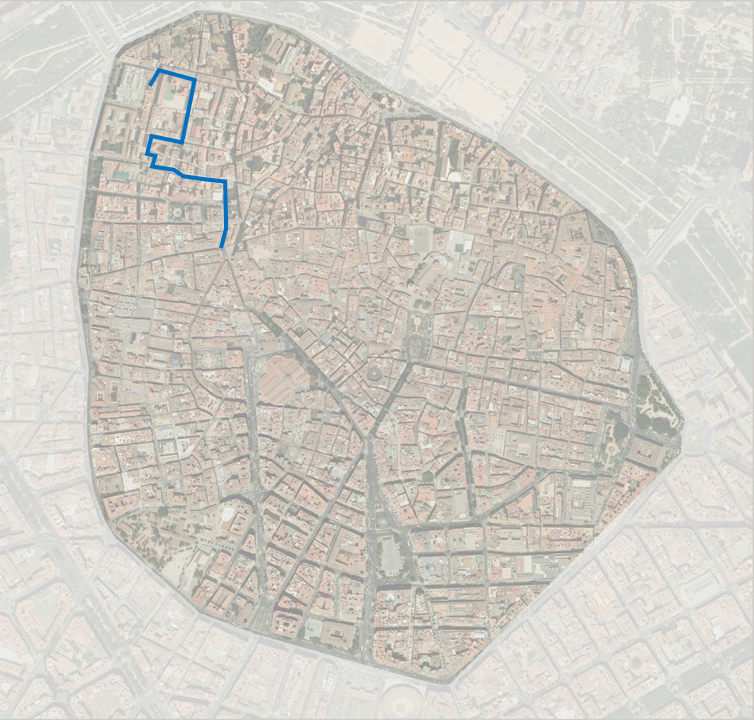
2. Islamic wall
Some archaeological remains of the old Islamic wall from the 11th century still remain embedded in the current urban fabric of the El Carmen neighbourhood. This is one of the most degraded areas of the city. It was as a result of the great flood of 1957 that many buildings of medieval craftsmanship were left in very poor condition, were abandoned and since then, year after year, have been left in a state of ruin and have been demolished. Today they are large plots of land full of rubble and rubbish, most of them adjacent to the route of the old wall.
Despite this state of ruin and abandonment, the nearby streets show their rich history with typical buildings of medieval origin, with a few craftsmen’s workshops (the few that remain are in danger of disappearing). As part of the El Carmen district, along its route there are dozens of old urban palaces of great architectural interest, as well as museums, theatres and a wide range of bars and restaurants.
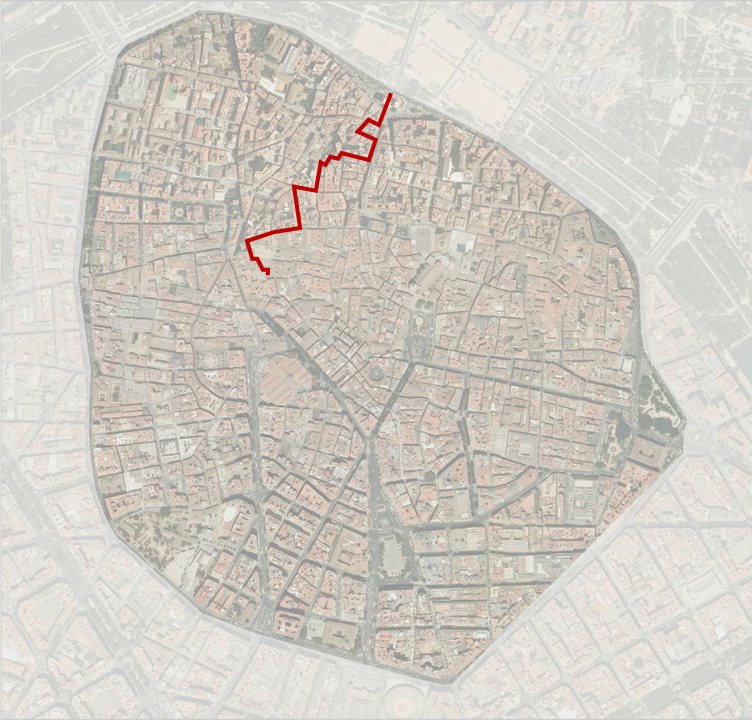
3. El Pilar neighbourhood
It is a neighbourhood of medieval origin that dates back to the 14th century. Its historical limits were Quart Street to the north, the plots of the old General Hospital to the south, the old 11th century Islamic wall that crossed the Market Square to the east and the medieval wall built in 1356 to the west. Although administratively it is called ‘El Pilar’ because of the convent, it is popularly known as the “velluters” or ‘velluters’ neighbourhood. These were textile craftsmen who transformed silk thread into velvet fabrics. It was the most important industrial quarter until the middle of the 19th century.
There are numerous cultural attractions, such as the old Hospital building, now converted into the Municipal Library; the Silk Art Museum; the Valencian Museum of the Enlightenment (MuVIM); the historic Escolapios building, which houses the largest dome in the city. Given its manufacturing history and despite the numerous demolitions in recent decades, it still preserves a large number of handcrafted houses of medieval origin, which offers an unparalleled architectural, historical and artisan attraction.
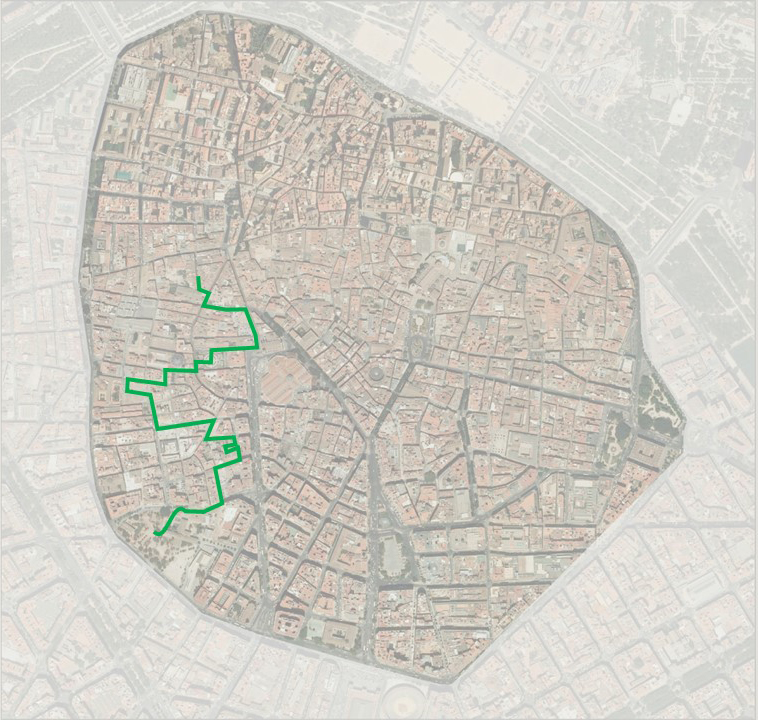
4. La Seu – Xerea neighbourhood
In the district of La Seu (Cathedral) is the true origin of the city. Behind the Cathedral and adjacent to the east with the building of the Basilica of the Virgen de los Desamparados, are the remains of the Roman foundation of Valencia, which took place in 138 BC on a river island. It is therefore the oldest and most monumental urban area of the city. Since then, this neighbourhood has been the political and religious heart of the city. Large aristocratic residences, museums, important monuments, public and institutional buildings and, of course, numerous examples of traditional architecture of medieval origin also bear witness to a rich craft and commercial activity. Visitors can find numerous hotels and tourist flats as well as a wide range of gastronomy and leisure activities.
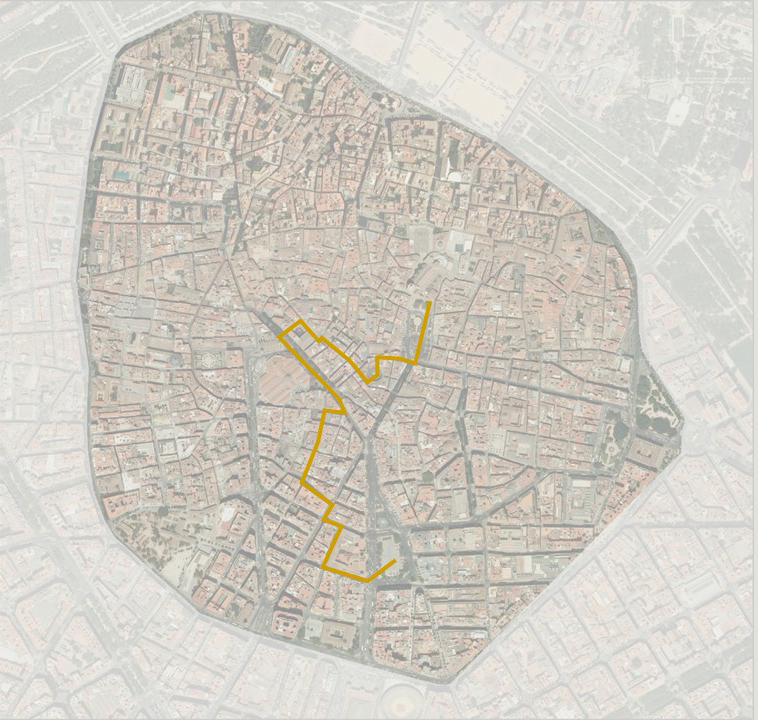
5. El Mercado neighbourhood
The El Mercado neighbourhood is home to more than 1,000 years of urban history. In Islamic times, the secondary branch of the Turía river that embraced the Roman and Visigoth city was used as a defensive moat for the 11th century wall. On its western side, a gate was opened (which was located where Ercilla street runs today next to the Lonja) and connected the interior of the city with the souk or market. From its very origins, it has been a commercial and craft centre up to the present day. A grandiose modernist building now houses the traditional stalls selling products from the Valencian market gardens and other foodstuffs. Opposite the main gate in the Market Square itself, stands the Lonja de los Mercaderes, a Gothic civil building that has been a UNESCO World Heritage Site since 1996. Numerous craft shops are still open to the public in its narrow, winding streets of medieval origin. The quarter is located in the geometrical centre of the historic city centre, so from here you can reach the other quarters in a maximum of 15 minutes on foot. Its cultural attraction is enormous with museums, theatres, monumental buildings, exhibitions, restaurants, bars and small pedestrian squares full of terraces for refreshments on hot summer days.
6. Universidad – San Francisco
The University of San Francisco neighborhood is located in the southeastern part of the historic center. Its current name comes from the historic university building, founded in 1499, and the former convent of San Francisco, which was built from the 13th century until the late 19th century, the central space of the current Town Hall Square. Today, the neighborhood is the modern commercial and service area par excellence, with numerous office buildings and companies in the tertiary sector. Thousands of people walk its streets and shops every day, and it offers a wide range of hotels and restaurants. It is the neighborhood in the historic center that has seen the greatest changes in its urban structure, as most of the buildings were constructed during the 20th century. There are hardly any vestiges of historic residential buildings and urban palaces. The oldest street, which still retains its medieval character, is the current Calle Músico Peydró.

 ENACT 15 mC