INRED 2025
The INRED 2025 Congress focused on the transition from innovation based on practical experience—with limited empirical grounding—to a model with a more academic approach. This approach emphasized the systematic analysis of teaching practices and their effects on learning, aiming to generate evidence that could be shared and critically reviewed by the academic community.
The event also addressed the new technical and ethical challenges presented by this model. The main themes were Educational Innovation and Networked Teaching—areas that gained increasing relevance as support tools in the teaching and learning processes for both educators and students. All proposals revolved around these core themes.
The conservation of cultural heritage is a collective responsibility that requires fostering education among younger generations, for which it is essential to encourage the development of a sense of connection. With this goal in mind, the present text analyzes the application of Participatory Action Research (PAR) as a methodological tool to generate social awareness and a stronger bond with cultural heritage. Within the framework of the European research project ENACT-15mC, this experience is presented through its implementation in two different educational contexts: the Master’s Degree in Architecture at the Universitat Politècnica de València and the Higher Vocational Training program at the Escuela de Artesanos de Valencia. In addition to documenting and diagnosing the critical situation of the emblematic shops in the Ciutat Vella district (Valencia), it has been possible to foster a direct connection between students and their own cultural heritage, as well as to develop critical thinking and engagement with a nearby social reality. In this regard, the results highlight the potential of this methodology to transform education into a meaningful experience, promoting a sense of belonging and collective responsibility that is essential for the protection of cultural heritage.
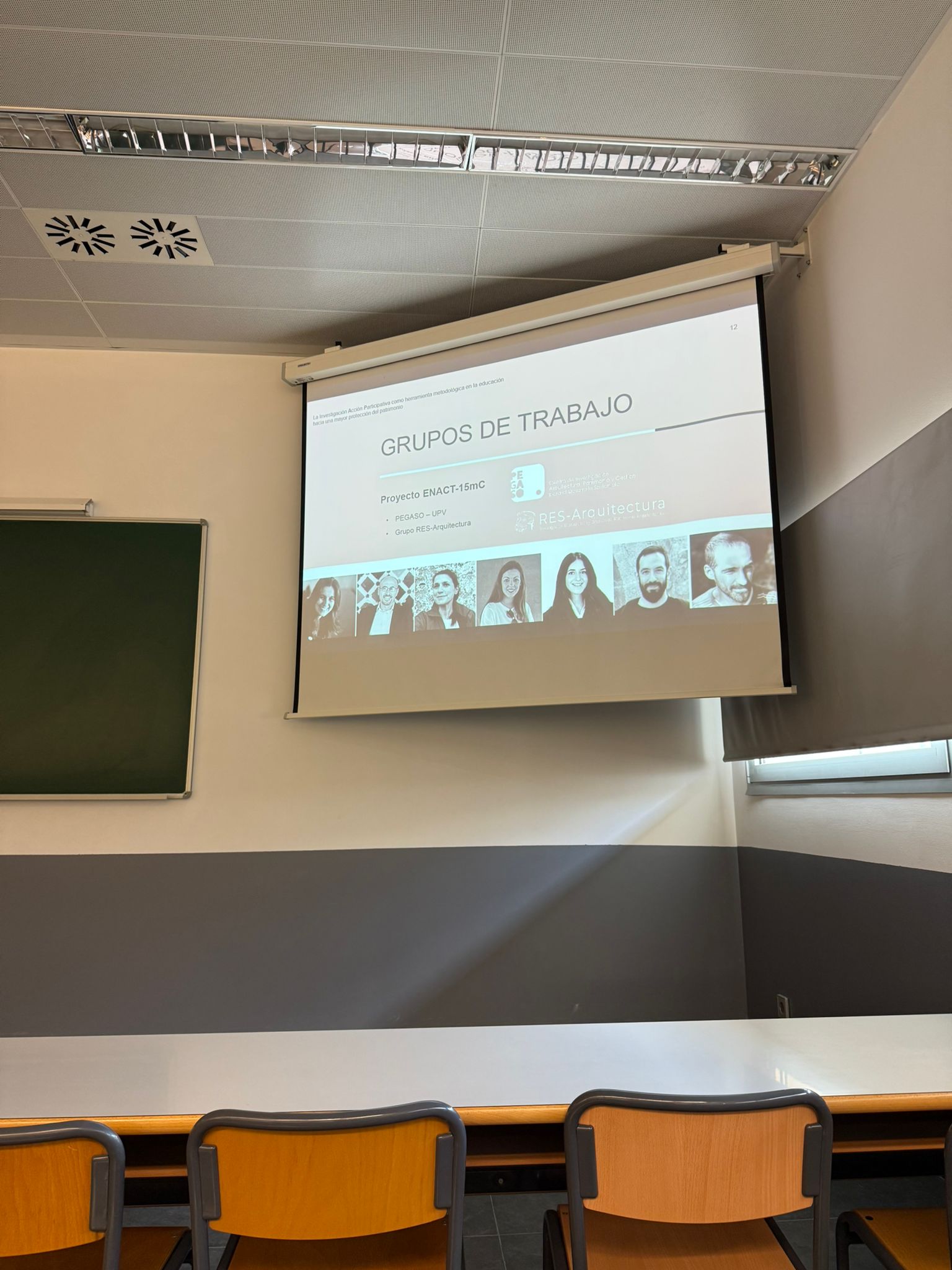
 ENACT 15 mC